
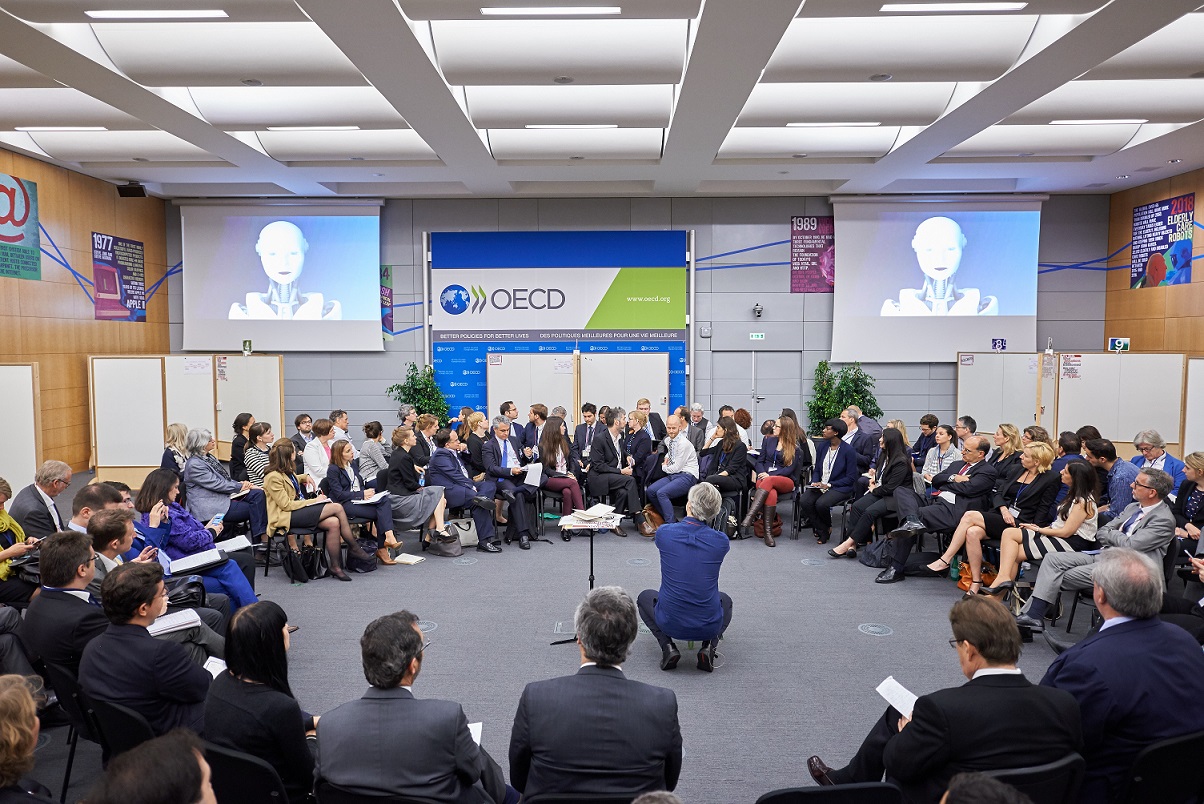
The UK and EU will push the world’s richest countries to end subsidies for foreign oil and gas operations and coal mining at a closed-door OECD meeting next month, according to people familiar with the matter. The proposal to cut off the biggest foreign source of public finance for fossil fuels is expected to spark heated negotiations at the OECD’s Paris headquarters. The move builds on a commitment by some OECD countries to align public finance institutions with Paris agreement goals to limit global warming to well below 2C and ideally 1.5C above preindustrial levels. But the effort to end subsidies for foreign projects will draw attention to the prevalence of domestic subsidies for oil and gas industries, even as a global deal to end fossil fuel production without the emissions captured at the upcoming UN COP28 climate summit looks increasingly unlikely.
Ending export credit agencies’ provision of loans and guarantees for fossil fuel projects would be “an essential first step to keeping our international climate goals within reach”, said Nina Pušić, an export finance climate strategist at the US environment campaign group Oil Change International. An estimated $41bn per year was spent by OECD countries’ export credit agencies to support coal, oil and gas projects between 2018 and 2020, according to OCI, nearly five times their support for clean energy.
Other than Mozambique, the biggest recipients of support during this time operated in developed countries including Canada, the UAE and Russia.
Rich countries agreed in 2021 to stop subsidies for coal-fired electricity generation abroad, showing this type of OECD decision can “have a catalytic effect on the clean energy transition”, Pušić added.
The move to redraw the international organisation’s members’ position on fossil fuels also builds on a pledge by some member states including the UK, Canada, France, Italy and the US at the UN COP26 summit in Glasgow two years ago. Their promise to end new public support for international fossil fuels by the end of 2022 included exceptions for projects where the emissions are captured, and for cases “consistent” with the Paris agreement. Governments also committed at Glasgow to push bodies such as the OECD and multilateral development banks to update their governance frameworks to align with Paris agreement goals.
The changes to the OECD’s arrangement on export credits would be voluntary. It would also require the consensus of a group of member states that includes major fossil fuel financiers that did not back the Glasgow pledge, such as Japan and South Korea. It would also put pressure on signatories to rein in their export credit agencies’ financing of fossil fuels abroad.
Directors at US export credit agency Exim, for example, voted in May to disburse almost $100mn to support the expansion of an Indonesian oil refinery, as well as fuel efficiency and safety upgrades. They also voted in July to back credit to support commodity trader Trafigura’s purchase of US liquefied natural gas for export to Europe. Exim said those decisions would support more than 12,000 jobs in the US, by boosting sales of the country’s oil and gas. It did not respond to a request for comment.
Louise Burrows, who runs climate and energy diplomacy for the Beyond Oil and Gas Alliance of governments including France and Denmark, said the OECD discussions would be a “useful forcing mechanism to start having conversations with laggards”. People close to UK Export Finance, Britain’s credit agency, said that Canada had committed to backing the UK’s planned proposal to the OECD ahead of the meeting next month. Canada’s finance department said it “looked forward to working alongside like-minded partners at the OECD and in other international forums to grow and promote the clean economy around the world”.
The EU has submitted its own proposal, according to one person familiar with the matter, after member states agreed on a draft proposal last month, according to another person familiar. It did not provide a comment. The bloc is making a concerted push to end support for oil, gas and coal. Its negotiating mandate for this year’s COP28 summit in Dubai, agreed by bloc climate ministers this month, says that the EU will call “for a phase out as soon as possible of fossil fuel subsidies which do not address energy poverty or just transition”.
New EU climate chief Wopke Hoekstra has described fossil fuel subsidies as “outdated and counterproductive”. But in a report published last week, the European Commission said total fossil fuel subsidies in the bloc had “surged” during the energy crisis in 2022 to reach €122bn, after remaining roughly stable at €56bn the previous year. “Member States must accelerate action to end fossil fuel subsidies,” it said.
Source:
Financial Times